Hand, foot and mouth disease: Symptoms, complications, and dental implications
Key Highlights
- Hand, foot and mouth disease (HFMD) is a highly contagious viral infection that often presents first as painful ulcerlike lesions in the mouth before spreading to the hands and feet.
- Young children are most affected, and symptoms can interfere with eating, drinking, and daily activities—serious complications are rare but possible.
- Dental teams should recognize HFMD early, document findings, stop elective treatment, refer to a medical provider, and reinforce strict infection control to help prevent spread.
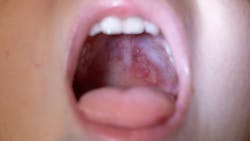
February is recognized as National Children’s Dental Health Month. Throughout this month, we often see numerous community-based events promoting access to care and education on pediatric oral hygiene. In the writing and research world, we see more manuscripts published on pediatric findings. This article addresses a disease that is not commonly discussed in dentistry but is frequently observed worldwide among pediatric patients: hand, foot and mouth disease (HFMD).
What is hand, foot and mouth disease?
HFMD is caused by human echo viruses, enterovirus (71), and the coxsackie A16 virus.1,2 HFMD is readily identified by its characteristic rash that spreads across the body, primarily on the mouth and extremities. The disease was first identified in New Zealand in 1957.2 It is transmitted via the fecal-oral route, and humans are the only known definitive hosts of the disease.2 HFMD can be spread through various routes, such as droplet transmission when an infected person sneezes, coughs, or talks, or by expelling contaminated saliva droplets.1-5 Touching contaminated surfaces and then touching your eyes, nose, or mouth, not washing your hands after using the restroom, or direct contact with a contaminated host’s symptoms is how the disease is spread.1-5
Pediatric population
HFMD can infect anyone at any age; however, the pediatric population is more commonly infected due to its mode of transmission and the inability of children to develop immunity to the viruses that spread HFMD.4 Since HFMD is typically found at a higher incidence in patients aged 5 and younger, anyone who works with or is a caregiver to these patients is often at an increased risk of exposure.1-5
Complications of HFMD
The most obvious complications of HFMD are that it makes a patient feel lethargic, febrile, and gives them a rash.1-5 These symptoms will often complicate everyday activities because the patient feels weak and may avoid eating and drinking. In addition, many pediatric patients report that the blisters are uncomfortable and have described them as “itchy,” “yucky,” or painful. Despite the obvious rash and flulike symptoms, other documented cases of HFMD have reported the following symptoms: neurological dysfunction, early-stage cardiopulmonary failure, and cardiopulmonary failure. The blistering rash and flulike symptoms are the most reported. The other symptoms are rare.1
HFMD and dentistry
Dental professionals need to be able to recognize the etiology of HFMD. It's imperative to remember it, as it is highly contagious. However, the prevailing view is that if a dental professional adheres to proper infection-control standards and wears appropriate personal protective equipment (PPE), the likelihood of transmitting the disease is very low.
Currently, there are few case studies, reports, or articles on HFMD and dentistry. Dental professionals who can recognize the disease and help guide a patient or caregiver as to the next possible steps to get officially diagnosed with HFMD could help slow the spread of the disease.
Typically, the rash spreads in the mouth before the patient first notices it on the extremities. The blisters will resemble ulcers and may or may not have a clear exudate. Pain is often associated with the lesions. Look for clusters of ulcerlike lesions on the tongue, buccal mucosa, alveolar mucosa, and palatal region.5
Dental professionals who identify lesions on patients’ hands or mouths should document them using an intraoral camera. Investigate for any additional symptoms such as lesions spreading to other parts of the body, and ask imperative questions such as: Has the patient recently had any fevers? Does the patient attend a daycare facility or school with other children? The lesions should be evaluated because they may resemble other conditions, including stomatitis or various herpetic viral infections. A health professional may even be identifying signs of sexual abuse instead of HFMD if they notice only signs of ulcers in the mouth.
If the patient or caregiver has sufficient evidence to suspect HFMD, the dental professional should terminate the appointment and not proceed with the planned dental treatment. Refer the patient or caregiver to their primary care physician or nurse. Immediately disinfect and sanitize the operatory, and wash your hands after doffing PPE. Update the patient’s medical record to document your findings.
If you think you have recently contracted the HFMD virus, the first step is not to panic. Wash your hands and retrace your steps. Ask the potential infectious source about their symptoms and whether they have recently been diagnosed with HFMD. If they say yes, you should monitor yourself for signs and symptoms, as it is highly contagious, and you want to slow the spread. If the potential host says no, but you still suspect they might, treat yourself as if you are infectious and monitor symptoms. Disinfect any surfaces that a potential host may have come into contact with and avoid touching any mucous membranes, as HFMD could enter your body. Avoid contact with others while you are actively showing symptoms of HFMD. A patient who has recently had HFMD may return to everyday life once they no longer have a fever and the rash is no longer present, or once the rash is covered by bandages.3
No immunizations are currently available to prevent HFMD. Because it is a virus, you can contract HFMD more than once in your lifetime.1
Conclusion
To date, there have been no documented cases of HFMD in dental offices. HFMD is a highly contagious virus that is more commonly observed in the pediatric population. While it is often not life-threatening, it can make everyday life slightly more complicated as the virus runs its course. Most symptoms can be managed at home, and patients can return to work within two weeks of initial contact. Dental professionals who can readily recognize the symptoms and are well versed in HFMD may help slow the spread of the disease in their communities.
Editor’s note: This article first appeared in Clinical Insights newsletter, a publication of the Endeavor Business Media Dental Group. Read more articles and subscribe.
References
- Zhu P, Ji W, Li D, et al. Current status of hand-foot-and-mouth disease. J Biomed Sci. 2023;30(1):15. doi:10.1186/s12929-023-00908-4
- Agrawal A. Presentation and diagnosis of Hand, foot, mouth disease in a young child: a case report. XVII; 24-28. doi:10.33882/ClinicalDent.15.34599
- About hand, foot, and mouth disease (HFMD). Centers for Disease Control and Prevention. May 7, 2024. https://www.cdc.gov/hand-foot-mouth/about/index.html
- Hand-foot-and-mouth disease: who gets and causes. American Academy of Dermatology Association. https://www.aad.org/public/diseases/a-z/hand-foot-mouth-causes
- Bradley S. The four stages of hand, foot, and mouth disease (HFMD). Health. Updated February 5, 2026. https://www.health.com/stages-of-hand-foot-and-mouth-disease-8707683
About the Author
 Tracee S. Dahm, MS, BSDH, RDH
Tracee S. Dahm, MS, BSDH, RDH
Tracee S. Dahm, MS, BSDH, RDH, is an adjunct clinical instructor for the North Idaho College School of Dental Hygiene in Coeur d’Alene, Idaho, and she also works in private practice. She has been published in several dental journals, magazines, webinars, and textbooks. Tracee is a key opinion leader on cutting-edge innovations in the hygiene field. Her research interests include trends in dental hygiene, improving access to dental care for the underserved, and mental health. Contact her at [email protected].