Is permanent lip makeup safer than an inner-lip tattoo? Risk factors and patient safety
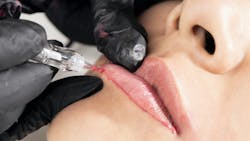
Increased accessibility and the normalization of body modifications have made cosmetic procedures and tattoos more commonplace. But have you ever encountered a patient with an inner lip or permanent makeup tattoo? Is having ink in or near the mouth compromising the oral microbiome?
Here's what dental professionals should know about lip tattoos-including risk factors, oral health implications, and how to talk to patients interested in inking their mouths.
Types of lip tattoos
The burgeoning industry of permanent makeup allows people, traditionally women, to simplify their morning routine through natural-looking tattoo ink meant to resemble eyeliner, lipstick, and more.1
There are two main types of lip treatments that fall under the umbrella of permanent makeup: lip blush (to add color) and lip liner (to augment the size of the lips). During the procedure, semi-permanent ink is injected in or directly around the lip line onto the lips via a tattoo pen. Pink and reddish pigments are typically used to produce a natural-looking effect.1
Inner lip tattoos are designed to be more permanent, with traditional black ink being injected into the underside of a person's lower lip. Numbers, letters, and simplistic symbols are common inner lip motifs.
 Tongue piercing
 Dental patients should avoid DIY braces.
Risks and side effects
Although generally heralded as safe, lip tattoos come with risks just like any other tattoo.
Common side effects of tattoos include infection, site irritation, swelling, and rashes due to saliva and bacteria mingling with the open wound from the tattoo pen/gun. People may also experience an allergic reaction to the ink, which may containsome unsafe ingredients.2 For permanent makeup tattoos specifically, allergic reactions can be caused by red dye that contains cinnabar, an ingredient known to irritate the oral cavity.3
Research led by chemist John Swierk at Birmingham University reported the presence of azo-containing dyes in 23 of the 56 inks analyzed. According to the European Commission's Joint Research Centre (JRC), "Exposure to bacteria or ultraviolet light can cause these dyes to break down into compounds that are potentially carcinogenic."4
Tattoo artists who are unaware of these potential dangers may be putting their clients at risk. When Swierk and his team interviewed tattoo artists about the inks they use, they didn't know much about the content of the ink despite being familiar with the brand.4
Additional research is being conducted on the latent and long-term effects of tattoo ink. An article by United Concordia Dental noted that the Food and Drug Administration "received reports of bad reactions to tattoo ink occurring 'right after tattooing and even years later.' Localized bacterial infections or blood-borne infections (like hepatitis B and C) can be the result of nonsterile needles, unclean tattooing practices, or contaminated ink."4
How patients can keep themselves safe
If a patient is considering a lip tattoo (or has one already), there are steps clinicians can share with them to keep them safe:
-
Use alcohol-free mouthwash after eating and smoking for several days after getting the tattoo
-
Avoid foods with a high acid content such as vinegar, tomatoes, and citrus fruits, as these can cause irritation after the procedure
-
Know the credentials and training of the tattoo artist (or the credibility of the permanent makeup clinic)
-
Ask about the sterile techniques the tattoo parlor uses and work with a state-licensed artist
By proactively educating patients about risk factors, safe aftercare practices, and the importance of choosing qualified, licensed practitioners, dental professionals can play a critical role in reducing complications. Ultimately, encouraging informed decision-making helps protect patients' oral health if they have or are considering getting a lip tattoo.
References
-
Blundell D. Women's Health Magazine. March 7, 2022. https://www.womenshealthmag.com/beauty/a39282066/lip-blushing/
-
A lip tattoo: Should you get ink on your lips? Colgate. January 9, 2023. https://www.colgate.com/en-us/oral-health/threats-to-dental-health/a-lip-tattoo-should-you-get-ink-on-your-lips
-
Kiser K. Lip tattoos: Help dental patients think before they ink. Today's RDH. September 3, 2022. https://www.todaysrdh.com/lip-tattoos-help-dental-patients-think-before-they-ink/
-
Trager R. Worrying ingredients found in tattoo inks made in the US. Chemistry World. September 1, 2022. https://www.chemistryworld.com/news/worrying-ingredients-found-in-tattoo-inks-made-in-the-us/4016170.article
About the Author
 Sarah Butkovic, MA, BA
Sarah Butkovic, MA, BA
Sarah Butkovic, MA, BA, is an Associate Editor at Endeavor Business Media, where she works on creating and editing engaging and informative content for today's leading online dentistry publications. She holds a Master's English Language and Literature from Loyola University Chicago and is passionate about producing high-quality content that educates, inspires, and connects with readers.