Stop the no-show nightmare: How smart scheduling software saves dental practices from empty chairs
Key Highlights
- How automated scheduling features can cut your no-show rate nearly in half while filling last-minute cancellations instantly
- Why millennials and Gen Z parents (your core patient base) need digital scheduling flexibility to manage their busy family lives
- The specific tools that turn empty appointment slots into filled chairs through intelligent waitlist management and patient communication

It's 2:15 PM on a Tuesday, and Maya, a working mom of two, realizes she needs to cancel her 4 PM dental cleaning. Her youngest came home from school with a fever, and she can't leave him with a babysitter.
In the old world, Maya would call your office, get put on hold, maybe leave a voicemail, and your 4 PM slot would sit empty. Your hygienist would clean instruments instead of teeth, and you'd lose that production for the day.
But Maya's dentist has smart scheduling software. She opens her phone, taps "reschedule," picks a new time that works, and the system immediately notifies three patients on the waitlist about the suddenly available 4 PM slot. Within 90 seconds, another patient claims it.
Zero phone calls. Zero lost revenue. Zero stress.
This is how the world is changing, and dental practices that adapt are seeing dramatic improvements in their no-show rates while those clinging to phone-only scheduling watch revenue walk out the door.
The hidden cost of no-shows: More than just lost revenue
Patient no-shows cost dental practices far more than the obvious lost appointment fee. Research shows dental no-show rates can be as high as 43.8%, with one pediatric study finding a 38.6% no-show rate, and practices relying solely on phone scheduling often see rates at the higher end of this range.
When someone doesn't show up, your team still gets paid, equipment sits idle, other patients miss opportunities, and your schedule flow gets disrupted. Research shows online scheduling can reduce no-show rates from 25% to 11%, creating immediate financial impact.
Why traditional scheduling creates no-shows
The fundamental problem with phone-only scheduling isn't that patients don't want dental care; it's that the scheduling process doesn't match how people live today.
Limited scheduling hours: Most dental offices schedule appointments during business hours when patients are also working, forcing them to accept times that don't work well for their actual schedules.
No visual schedule access: Patients can't see what options are available, forcing them to accept whatever you suggest rather than choosing times that genuinely work for their lives.
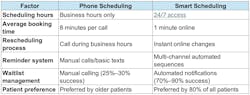
Rescheduling friction: When patients need to reschedule, they have to call during business hours and wait on hold. Many simply don't show up rather than deal with this hassle.
The generational shift: Your patient base has changed
Your patient demographics have fundamentally shifted, and your scheduling methods need to catch up.
Millennials are now your core patient base: Millennials (born 1981-1996) are now in their late 20s to early 40s. These are the parents booking family dental appointments, and they grew up with smartphones expecting digital-first experiences.
Gen Z are new patients: Generation Z (born 1997-2012) are now teenagers and young adults starting to manage their own dental care. For them, calling to schedule an appointment feels outdated.
These generations prefer self-service: 83% of consumers are now familiar with online scheduling because they book flights, restaurant reservations, and service appointments online. They expect the same convenience from healthcare.
Yes, some older patients still prefer phone calls, and you should absolutely maintain phone scheduling as an option. But if your practice only offers phone scheduling, you're automatically excluding the growing majority of patients who prefer digital booking.
How smart scheduling software prevents no-shows
Modern dental scheduling software doesn't just digitize appointment booking; it actively works to prevent no-shows through several automated features:
Automated reminder systems
Unlike basic text reminders, smart scheduling platforms send multi-touch reminder sequences:
7 days out: Confirmation email with appointment details and easy reschedule options
48 hours before: Text reminder with one-click confirm, reschedule, or cancel buttons
1 day before: Final reminder with practice information and what to bring
Healthcare studies show patients reminded of appointments are 23% more likely to attend, because reminders keep appointments top-of-mind and make it easy for patients to take action if their plans change.
Instant waitlist management
Here's where smart scheduling software becomes truly powerful: when someone cancels or reschedules, the system automatically notifies patients who want earlier appointments.
Traditional method: Your front desk team manually calls through a list hoping someone answers and wants the slot. This process can take 30-60 minutes and often fails to fill the opening.
Smart software method: Automated systems fill 70-90% of cancelled slots versus 25-30% with manual processes. The system instantly texts or emails waitlisted patients, and appointments get filled within minutes instead of hours.
Flexible self-rescheduling
The biggest game-changer for no-show prevention is giving patients control over their appointments:
Real-time availability: Patients can see your actual schedule and pick times that work for their lives, not just accept whatever you offer.
Easy rescheduling: When plans change, patients can reschedule immediately without waiting for office hours or phone availability.
After-hours access: Most appointments are now booked outside of office hours, meaning you capture appointments that would never happen with phone-only scheduling.
The financial impact: Real numbers from real practices
Let's look at the concrete financial benefits of reducing no-shows through smart scheduling:
Before smart scheduling:
- No-show rate: 18%
- 100 weekly appointments scheduled
- 18 no-shows per week
- Average appointment value: $150
- Weekly lost revenue: $2,700
- Annual lost revenue: $140,400
After smart scheduling:
- No-show rate: 8% (56% improvement)
- 100 weekly appointments scheduled
- 8 no-shows per week
- 10 fewer no-shows × $150 = $1,500 weekly recovery
- Annual recovered revenue: $78,000
This doesn't include additional revenue from filling last-minute cancellations through automated waitlist management. For a practice with moderate no-show challenges, smart scheduling software can recover $78,000-$120,000 annually.
Appointment reminders that actually work
Traditional reminder calls often go to voicemail and create more work than value. Smart scheduling platforms use multi-channel reminder strategies:
Multi-channel approach
- Email confirmations: Detailed appointment information with easy action buttons
- Text message reminders: Brief, actionable messages patients can respond to directly
- Automated sequences: Multiple touchpoints across different timeframes
The key is making it incredibly easy for patients to take action. When rescheduling requires one tap instead of a phone call, patients are much more likely to reschedule rather than simply not show up.
The self-service rescheduling revolution
One of the most powerful no-show prevention tools is eliminating friction from the rescheduling process:
Old way: Patient needs to reschedule → calls during business hours → waits on hold → explains situation → accepts whatever alternative time is offered
New way: Patient needs to reschedule → opens phone → taps reschedule → sees all available options → picks the perfect time → confirms instantly
This transformation is particularly important for your core patient demographic of busy parents juggling work, school schedules, and family obligations.
Why flexibility matters more than ever
Modern families face scheduling complexity that didn't exist a generation ago:
- Both parents work: Making it difficult to call during business hours for scheduling changes
- School schedule conflicts: Parent-teacher conferences and sick children create constant scheduling disruptions
- Work meeting changes: Last-minute work obligations require flexible rescheduling options
When patients can quickly reschedule dental appointments online instead of skipping them due to conflicts, your no-show rate drops dramatically.
The bottom line: Empty chairs cost more than software
Every empty chair in your schedule represents lost revenue that can't be recovered. Consider this calculation:
- Smart scheduling software: $200–$500/month
- One prevented no-show per day: $150/day × 20 working days = $3,000/month recovered
- Net monthly benefit: $2,500–$2,800
When you add revenue from filling last-minute cancellations, most practices see 5–10x ROI on their scheduling software investment while reducing staff stress and improving patient satisfaction.
FAQ
Q: How much can online scheduling software really reduce my no-show rate?
A: Research shows online scheduling can reduce no-show rates from 25% to 11%, and practices typically see 40%–60% improvements within 90 days through automated reminders and better patient engagement.
Q: Will automated waitlist management actually fill my last-minute cancellations?
A: Yes, automated systems fill 70%–90% of cancelled appointment slots compared to 25%–30% success with manual phone calling, filling appointments within minutes instead of hours.
Q: Do patients really prefer online scheduling for dentists over calling?
A: 80% of patients prefer doctors who offer online scheduling, with this preference strongest among millennials and Gen Z who now make up the majority of your patient base.
Q: How do automated appointment reminders prevent no-shows?
A: Multi-channel reminder systems with easy confirm/reschedule buttons catch patients when they're most likely to engage, resulting in 23% better attendance rates compared to traditional methods.
Q: Is online scheduling software worth it for smaller dental practices?
A: Absolutely. Even small practices can recover $78,000+ annually by reducing no-shows from 18% to 8%. The software typically pays for itself within 60–90 days through preventing no-shows alone.
About the Author
Danielle Caplain
Danielle Caplain is a copywriter at My Social Practice, where she crafts compelling, SEO-friendly content that helps dental practices grow their online presence and connect with patients. My Social Practice is a dental marketing company that provides comprehensive dental marketing services to thousands of practices across the United States and Canada.