Zero-click searches mean zero new patients unless you master AI SEO
Key Highlights
- Why marketing agencies keep inventing new acronyms (LLMO, GEO, AEO) for the same goal: getting AI to recommend your dental practice by name
- Seven immediate changes you can make today to ensure ChatGPT knows about your practice - without spending a dime on new marketing
- How to track whether AI assistants actually mention your practice using our comprehensive visibility framework

Let's start with an uncomfortable truth: Your beautiful practice might be invisible if you're not in Google's AI Overviews. Not because of poor SEO, but because patients aren't even clicking anymore. They're getting answers directly from AI assistants and never visiting any website at all.
Picture this scenario: Sarah needs an emergency root canal. Instead of Googling "endodontist near me" and clicking through websites, she asks ChatGPT: "I need an endodontist in Denver who takes Blue Cross Blue Shield and can see me this week."
ChatGPT responds with specific practice names, complete with insurance details and availability. Your practice either gets named, or it doesn't exist in that conversation. There's no second page. No ads to buy. Just recommendations.
This is happening right now. ChatGPT processes billions of queries daily, with healthcare questions making up a massive chunk. AI for dental SEO is transforming how practices need to think about visibility because nearly half of younger patients already prefer AI assistants over traditional search.
LLMO, GEO, AEO: Same goal, different letters
The marketing world loves acronyms. LLMO (large language model optimization), GEO (generative engine optimization), AEO (answer engine optimization)—they're all describing the same fundamental shift: optimizing for AI recommendations instead of Google rankings. Future-proofing your practice means understanding how dental GEO is changing patient search.
Think of it like the Yellow Pages evolution. First, practices named themselves "AAA Dental" to appear first alphabetically. Then came website optimization. Next, Google optimization. Now we're watching the same gold rush with AI optimization.
Your agency might pitch their proprietary "AISMO" strategy next week. Don't get distracted by the terminology. Whether they call it LLMO, GEO, or their made-up acronym, your dental practice needs AI-ready content to survive the zero-click era.
The traditional SEO model is breaking
Remember the old playbook? Optimize for keywords, build backlinks, fight for first-page rankings. Success meant appearing when someone searched "dentist [your city]."
That model assumed people would click through to your website. But AI changed the game completely.
The old patient journey: Search "pediatric dentist Dallas" → See 10 blue links → Click several → Compare websites → Call for appointment
The new patient journey: Ask ChatGPT: "My 4-year-old is scared of dentists. Who's good with anxious kids in North Dallas?" → Get specific recommendation with details → Call that practice directly
The difference? In the new model, if you're not mentioned by name, you don't exist. Period.
How AI actually decides who to recommend
Understanding how AI constructs recommendations is crucial for optimization. LLMO for dentists requires knowing exactly where AI pulls its information:
Your Google Business Profile acts as AI's primary source of truth. Every field matters - hours, services, insurance acceptance, reviews, photos, posts, Q&As. This isn't just another directory anymore; it's your AI resume.
Review patterns teach AI your strengths. When dozens of reviews mention "gentle with anxious patients," AI learns this is your specialty. Star ratings matter less than specific, detailed feedback.
Website structure feeds AI's understanding. Clear service pages with specific information get parsed and remembered. Vague marketing copy gets ignored. AI needs facts: "Dr. Martinez has placed 2,000+ implants since 2015" beats "experienced implant dentist."
Local citations across healthcare directories, news sites, and community platforms reinforce your legitimacy. Every mention builds your AI authority profile.
Social signals demonstrate you're actively operating. Social media now directly impacts SEO visibility because AI recognizes engaged practices as more trustworthy. AI is changing the game for dental social media marketing, making consistent posting more critical than ever.
7 quick wins to make your practice AI-visible today
Before diving into complex strategies, implement these seven changes immediately:
- Rewrite your Google Business Profile description - Replace marketing fluff with specifics: exact procedures, all insurance providers, specific technologies, unique differentiators
- Add detailed Q&As - Answer the top 10 questions your front desk hears daily, using complete sentences AI can quote verbatim
- Fix your service page headers - Change "Our Services" to question formats like "What Types of Dental Implants Do We Offer?"
- Create an AI training page - Get found by AI with a dedicated page listing all practice information in structured format
- Launch a review campaign - Train staff to encourage specific reviews: "Could you mention which procedure you had and your insurance experience?"
- Implement structured data - Add schema markup for medical practices, practitioners, services, and insurance acceptance
- Publish answer-first content - Create blog posts titled as actual patient questions with clear, direct answers in the first paragraph
Building your comprehensive AI foundation
Now for the deeper work. Transform your entire digital presence into something AI can confidently recommend.
Master your Google Business Profile
Go beyond basic completion. Specify "single-tooth implants using Nobel Biocare, All-on-4 full arch restoration, zygomatic implants for severe bone loss" instead of "dental implants." List every insurance plan, not just "most insurance accepted."
Your review strategy needs surgical precision. Generic five-star reviews saying "great dentist!" don't help AI understand your expertise. You need reviews mentioning specific procedures, insurance experiences, and patient concerns addressed.
Update Q&As weekly. Have team members add real questions they answered that day. AI treats these as training data for understanding your practice.
Restructure your website content
Every page needs to answer the fundamental questions: who, what, when, where, why, and how. Structure content in scannable chunks with clear headers. Your dental website might be hurting your growth without these simple SEO fixes.
Your practitioner pages should read like AI training documents. Don't just list credentials - quantify expertise: "Dr. Johnson: 15 years specializing in TMJ treatment, 500+ successful cases, certified in neuromuscular dentistry, published research on joint disorders."
Service pages need specifics AI can extract: exact procedures offered, typical costs or ranges, insurance coverage details, recovery times, success rates, and technology used.
Leverage strategic technologies
Online scheduling isn't just convenient—it's an AI ranking signal. AI recognizes practices offering real-time booking as more accessible and recommends them more frequently.
Tracking your AI visibility success
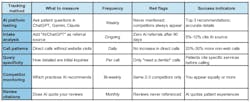
Traditional analytics won't reveal if ChatGPT recommends you. Use this framework instead:
The budget-friendly implementation plan
You don't need a massive budget to start. Focus on these zero-cost optimizations first:
Week 1: Rewrite your Google Business Profile with extreme specificity. Add 10 Q&As based on actual patient questions.
Week 2: Update all service pages with question-based headers and specific details. Add practitioner expertise quantification.
Week 3: Launch your review campaign focusing on detail and recency. Train every team member on the new review request script.
Week 4: Create five blog posts answering your most common patient questions. Title them exactly as patients would ask AI.
Month 2: Implement structured data markup. Add your AI training page. Begin testing your visibility weekly.
Month 3: Analyze results, identify gaps, double down on what's working.
The First-Mover Advantage Is Real
Most dental practices haven't heard of LLMO, GEO, or AEO yet. They're still fighting for Google rankings while the entire game changes around them. This knowledge gap creates massive opportunities. While competitors debate whether AI matters, you'll already be the practice ChatGPT recommends by name.
But this window won't last forever. As more practices catch on, the bar for AI visibility will rise. Starting now means establishing your AI presence before the competition even knows there's a race.
Taking action in the zero-click era
AI SEO makes it easier to see what’s working, and what’s holding you back. If you want a clear picture of your current performance, start with a free AI SEO audit to uncover opportunities for immediate improvement.
For a deeper dive into how AI-driven SEO applies specifically to dental practices, download this AI SEO for Dentists eBook and learn how to build sustainable visibility, traffic, and patient growth.
The practices winning tomorrow won't necessarily have the biggest marketing budgets. They'll be the ones who understood early that visibility means something different now - not ranking on Google, but being the name AI mentions when patients ask for help.
FAQ
Q: How does ChatGPT choose which dentist to recommend? A: ChatGPT analyzes information from Google Business Profiles, reviews, websites, and local directories to identify practices that match what users are asking for. It prioritizes practices with detailed information, recent positive reviews, and clear service descriptions.
Q: Does ChatGPT get paid to recommend certain dental practices? A: No, AI assistants like ChatGPT don't accept payment for recommendations. They pull from publicly available information online. You can't buy your way into AI recommendations like you can with Google Ads.
Q: Why doesn't my dental practice show up when I ask ChatGPT about dentists in my area? A: If ChatGPT doesn't mention your practice, it likely can't find enough specific information about you online. Update your Google Business Profile completely, generate detailed reviews, and ensure your website clearly states your services, location, and insurance acceptance.
Q: Do I need a website for AI to recommend my dental practice? A: While a website helps significantly, your Google Business Profile is actually more important for AI recommendations. However, having both with consistent, detailed information gives you the best chance of being mentioned.
Q: Can I ask ChatGPT directly to add my dental practice to its recommendations? A: No, you can't directly submit your practice to ChatGPT. Instead, focus on making your online presence so clear and comprehensive that AI naturally discovers and recommends you when relevant.
About the Author
Danielle Caplain
Danielle Caplain is a copywriter at My Social Practice, where she crafts compelling, SEO-friendly content that helps dental practices grow their online presence and connect with patients. My Social Practice is a dental marketing company that provides comprehensive dental marketing services to thousands of practices across the United States and Canada.