Wellness Corner: 5 simple movements to reduce pain NOW
Key Highlights
- Five quick mobility movements can help dental professionals relieve neck, shoulder, back, and hip tension during the workday.
- Simple stretches and posture resets performed between patients may improve circulation, mobility, and overall comfort.
- Incorporating brief movement breaks into daily practice can help counter the physical strain caused by prolonged static postures in dentistry.
It’s 9 a.m. Your neck is tight, your shoulders are creeping toward your ears, and your lower back is already talking to you—and it’s only Tuesday.
Ideally, you came to work with a charcuterie board full of body preparedness: strength training, stretching, mobility practice, sleep recovery, and hydration. If that ideal world scenario didn’t happen and you’ve got fire burning down your spine, these movements may help you right now to make it through the workday.
Dentistry requires prolonged static postures, repetitive movements, and hours spent in positions the body was never meant to hold for long periods of time. Over time, muscles stiffen, joints lose mobility, circulation decreases, and discomfort builds.1,2
These five movements can be done between patients, walking between operatories, or during morning huddle in as little as a few seconds. No equipment. No sweating. No overthinking. Just movement.
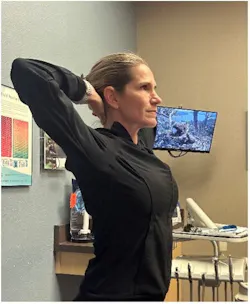
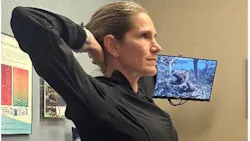
No. 1: Thoracic extension
Place your hands on your hips or gently behind your head. Lift your chest and extend through your upper back while your elbows move outward and slightly backward. Don’t force the movement—simply move out of the forward-flexed position you’ve been in.
- This helps counter the rounded upper back posture commonly seen in long-term clinical practice.
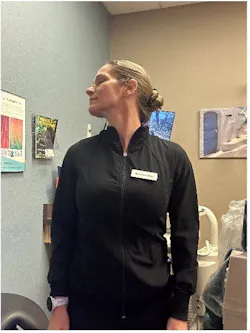
No. 2: Controlled neck rotations
Slowly move your neck through a full, pain-free range of motion by drawing a controlled circle to the end of your reach with your chin. Move slowly and intentionally, then reverse directions. Crepitus is common but can be reduced with consistency.
- This restores neck mobility and helps reduce the effects of prolonged static neck flexion.
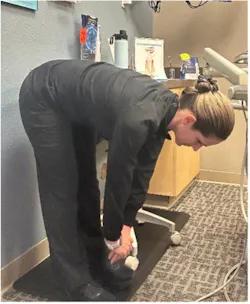
No. 3: Hip hinge reset
With soft knees, hinge forward at your hips while keeping your lower back neutral. Let your upper body relax. You can rest your hands on your thighs or let them hang. For a bonus, slowly sway side to side to feel a deeper stretch through the posterior chain. Slowly return to standing.
- This helps unload the lower back and reset tight hamstrings and glutes.
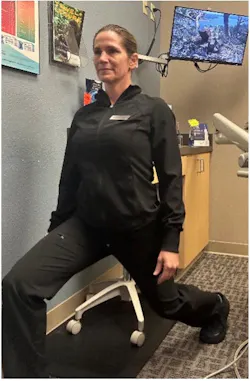
No. 4: Hip flexor stretch
Step one foot back into a split stance and gently bend the front knee while keeping your torso upright. Squeeze the glute of your back leg slightly and shift your weight forward until you feel a stretch through the front of the hip. Hold for a few seconds and switch sides.
- This helps offset prolonged sitting and standing in forward-flexed positions while opening tight hip flexors that may contribute to lower back discomfort.
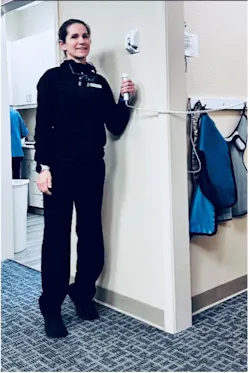
No. 5: Calf raises
Perform 10–15 slow calf raises. Quickly rise up on the toes, pause, and slowly release. Nothing aggressive—just get the lower body moving and blood flowing more efficiently. Bonus: this takes about the same amount of time as most panoramic exposures.
- This improves circulation and helps break up the effects of prolonged static standing or sitting.
Keep it simple
You don’t need perfect form. You don’t need to do all five every time. You just need to move. Even one or two of these movements between patients is enough to interrupt the repetitive patterns your body gets stuck in all day.3 The goal isn’t to overhaul your routine. It’s to stop staying in the same position for hours at a time. Because what you do between patients matters just as much as what you do during them.
Dentistry is a sport. Train accordingly.
Editor’s note: This article first appeared in Clinical Insights newsletter, a publication of the Endeavor Business Media Dental Group. Read more articles and subscribe.
References
- Valachi B, Valachi K. Mechanisms leading to musculoskeletal disorders in dentistry. J Am Dent Assoc. 2003;134(10):1344-1350. doi:10.14219/jada.archive.2003.0048
- Gupta A, Bhat M, Mohammed T, Bansal N, Gupta G. Ergonomics in dentistry. Int J Clin Pediatr Dent. 2014;7(1):30-34. doi:5005/jp-journals-10005-1229
- Hayes MJ, Smith DR, Cockrell D. Prevalence and correlates of musculoskeletal disorders among Australian dental hygiene students. Int J Dent Hyg. 2009;7(3):176-181. doi:10.1111/j.1601-5037.2009.00370.x
About the Author
 Katrina Klein, RDH, CEAS, CPT
Katrina Klein, RDH, CEAS, CPT
Katrina Klein, RDH, CEAS, CPT, is a 19-year registered dental hygienist, national speaker, author, competitive bodybuilder, certified personal trainer, certified ergonomic assessment specialist, and biomechanics nerd. She’s the founder of ErgoFitLife, where she teaches that ergonomics and fitness are a lifestyle to prevent, reduce, and even eliminate workplace pain.