Severe odontogenic infections disproportionately affect men
Key Highlights
- A Finnish study of hospitalized patients found that men experience severe odontogenic infections more frequently than women, likely due to lower rates of preventive dental care and poorer oral health habits.
- Lower income, being unmarried, and delayed treatment were associated with a higher risk of dental infections progressing to hospitalization, highlighting the role of social and economic factors in oral health outcomes.
- Most severe dental infections are preventable through early diagnosis, routine dental care, timely treatment of caries and periodontal disease, and improved access to preventive services.
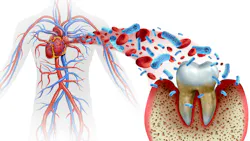
A new Finnish study shows that men are hospitalized for severe dental infections significantly more often than women. This underscores the impact of oral‑health behaviors and socioeconomic differences on disease progression.
A doctoral dissertation from the University of Helsinki brings renewed attention to a serious but often underrecognized clinical problem: severe odontogenic infections (SOIs). These advanced infections can require hospital admission, surgical intervention, intensive care, and, in the most severe cases, may become life‑threatening.
Drawing on data from 2,838 patients treated at the oral and maxillofacial surgery emergency department of HUS Helsinki University Hospital, the study found that men were consistently overrepresented among hospitalized patients and were typically younger than the affected women.1
“Men tend to attend routine dental examinations less regularly and often have less consistent oral hygiene habits,” says Finnish dentist and researcher Jussi Furuholm, who conducted the study. “This increases the risk that dental caries and other common oral diseases will develop and remain undetected until symptoms appear.”
He adds that targeted oral‑health education for young men could improve prevention and early detection.
Oral health as a marker of inequality
The Finnish findings demonstrate a broader global challenge. Oral diseases are among the most common noncommunicable conditions worldwide, affecting an estimated 3.5 billion people, according to the World Health Organization. Untreated dental caries alone affects around 2.5 billion people, making it the most prevalent health condition globally.2
The financial burden is substantial: the WHO estimates that oral diseases generate US$387 billion in direct health-care costs annually, and an additional US$323 billion in lost productivity.2
Beyond their financial impact, oral diseases are increasingly recognized as indicators of wider health inequalities. A growing body of research links poor oral health with cardiovascular disease, diabetes, and adverse pregnancy outcomes, reinforcing oral health as a key part of general well‑being.
How routine dental disease becomes severe
Common oral conditions—including tooth decay and periodontal disease—can progress into serious infections when left untreated. While many infections remain localized, some spread into deeper tissues of the face and neck or enter the bloodstream, requiring hospital‑level care.
The dissertation identifies SOIs as the outcome of a complex interaction among bacterial virulence, the host immune response, and anatomical pathways that promote the spread of infection. These infections are typically polymicrobial, with Streptococcus species frequently involved.
“The risk of severe infection increases with age and impaired immune function. However, outcomes are significantly improved through early diagnosis, timely treatment, and prompt removal of the source of infection,” Furuholm notes.
Men disproportionately affected
One of the study’s clearest findings is the overrepresentation of men among hospitalized patients. This is consistent with international evidence showing that men are less likely to seek preventive dental care and more likely to postpone treatment. Research such as Lipsky et al. (2021) has documented persistent sex‑ and gender‑based differences in oral‑health behaviors and outcomes.3
Furuholm’s research also shows that socioeconomic variables further shape risk.
Additional reading: Game changers in dentistry and oral medicine: From quick diagnosis to efficient treatment of serious gum diseases
“Lower income and being unmarried were both associated with a higher likelihood of hospital admission, suggesting that social isolation and disadvantage may contribute to disease progression,” he notes.
Although most dental infections can be managed in primary care, severe cases can lead to complications such as sepsis, pneumonia, and the need for intensive care. The study found that mandibular infections were more often associated with intensive care treatment than maxillary infections.
It also showed that apical periodontitis—an infection around the root tip, often caused by untreated decay or failed root‑canal treatment—was the most common underlying dental problem leading to hospitalization.
“Patients with this condition showed higher systemic inflammation at first examination, suggesting that chronic dental infections may contribute to whole‑body inflammatory burden,” Furuholm says.
A largely preventable clinical pathway
Microbiological analysis in Furuholm’s doctoral dissertation showed that infections involving the Streptococcus anginosus group were linked to longer hospital stays and a higher likelihood of intensive care admission.
This bacterial group is known for causing deep, abscess‑forming infections, helping to explain why SAG‑positive cases tend to progress more aggressively and require more intensive treatment.1,4 Overall, the data show that SOIs are often the final stage of a gradual and largely preventable disease process. Many patients who end up in the hospital are otherwise healthy. Furuholm points out that this highlights clear missed opportunities for earlier intervention.
This also mirrors a wider global pattern: most oral diseases are preventable, yet access to timely and affordable dental care remains uneven.
Key preventive measures include reducing sugar intake, strengthening preventive care, and improving early access to treatment, Furuholm notes.
A wider public‑health signal
Beyond clinical dentistry, the study shows how gender, income, and social circumstances shape oral‑health outcomes. The higher proportion of men among severe cases raises significant questions about health-care engagement and preventive behavior.
As Furuholm notes, even minor dental problems can escalate if neglected:
“A simple cavity or untreated infection can, in the worst case, progress into a serious, hospital‑requiring, and even life‑threatening condition. These are often preventable, and timely treatment is critical—not only for patients with comorbidities but also for otherwise healthy individuals.”
Editor’s note: This article first appeared in Clinical Insights newsletter, a publication of the Endeavor Business Media Dental Group. Read more articles and subscribe.
References
- Furuholm J. Severe odontogenic infections: Men in the danger zone? Doctoral dissertation, University of Helsinki; 2024. http://hdl.handle.net/10138/625469
- Global Oral Health Status Report (2022). World Health Organization. Incorporating global cost estimates from Listl et al., as summarized by Heidelberg University Hospital (2024).
- Lipsky MS, Su S, Crespo CJ, Hung M. Men and oral health: a review of sex and gender differences. AJMH. 2021;15(3):1–8. https://doi.org/10.1177/15579883211016361
- Clarridge JE, Attorri S, Musher DM, Hebert J, Dunbar S. Streptococcus intermedius, Streptococcus constellatus, and Streptococcus anginosus (“Streptococcus milleri Group”) are of different clinical importance and are not equally associated with abscess, clinical infectious diseases. Clin Infect Dis. 2001;32(10):1511-1515. doi:10.1086/320163
Prevention pays off—for both individuals and society
The finding that men are more likely to be hospitalized for severe dental infections raises a wider question: who is responsible for preventing these cases—the individual or society?
According to Jussi Furuholm, who conducted the study, the answer is both.
“The issue is closely linked to how medical systems are organized,” he says. “Countries differ in the balance between public and private health care, but the same principle applies everywhere: regular dental checkups, preventive care, and good self‑care can prevent most serious dental infections.”
The study stresses that severe oral infections rarely develop suddenly. In most cases, they progress from common conditions—such as tooth decay or gum disease—that have gone untreated. Early intervention is not only better for patients, but also far less costly than hospital treatment once an infection has spread.
For that reason, investing in preventive oral health care makes sense from both a public‑health and economic perspective. Routine checkups, easier access to dental services, and well-designed community awareness campaigns can help reduce the number of severe infections requiring hospital care.
Furuholm also sees a role for modern communication channels in encouraging improved oral health, specifically among younger adults.
“Social media is an effective way to reach both young people and working‑age adults,” he says. “Health-care professionals should make greater use of these channels to raise awareness about the importance of oral health.”
Ultimately, oral health should not be viewed separately from general health. Growing evidence links poor oral health to conditions such as cardiovascular disease and diabetes, stressing the value of preventive dental care as an investment in overall well‑being.
About the Author
 Nina Garlo-Melkas, MSc
Nina Garlo-Melkas, MSc
Nina Garlo-Melkas, MSc, is a health and science journalist.