Asking for a Friend: Can we stop saying “deep cleaning”?
Key Highlights
- Words shape patient understanding: Replacing "scaling and root planing" with "deep cleaning" can create misconceptions about periodontal therapy and the role of dental hygienists.
- Clear terminology supports better care: Helping patients understand the differences between prophylaxis, scaling and root planing, and periodontal maintenance improves informed decision-making and treatment acceptance.
- Every hygiene visit includes subgingival care: Educating patients that routine cleanings extend below the gumline reinforces the importance of professional periodontal care and the unique expertise of dental hygienists.
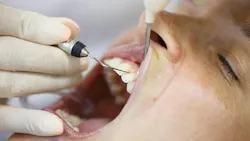
Scaling and root planing, deep cleaning—tomato, to-mato. Semantics, right? But what we are saying, even in simplified text, has a butterfly effect that is dangerously going unnoticed.
Why correct terminology matters
While research1 supports that the gap between dental professionals and their patients' literacy must be connected to patient health and safety to ensure effective communication and understanding, we must be cautious not to reduce a procedure by oversimplifying a definition. In doing so, we risk our patients electing compliance of recommended care, and we as professionals contribute to blurring lines further in who can do what in a dental role without patients knowing the difference. We want our patients to understand the meanings and to know the difference.
“Deep cleaning” and why we say it
The terminology “deep cleaning,” is generally used to explain to periodontally affected patients that they need nonsurgical active therapy in the form of scaling and root planing. It’s hard for patients to conceptualize a sulcus, a periodontal pocket, or why we do this only in localized pockets versus the entire dentition, so we found ways to make it easier for them to understand, hence the oversimplified term “deep cleaning.” However,“deep cleaning” implies a misconception that would represent dysbiosis and contribute to various forms of oral disease.
One issue with this jargon is that “deep cleaning” becomes associated with a limitation to periodontal therapy or periodontal maintenance visits. For example, when I see my alternating patients for periodontal maintenance, they assume I am always doing a “deep cleaning,” and their general dentist is always doing a “regular cleaning,” when actually a periodontal maintenance should be happening in both places in order to maintain sites that have had recent active therapy.
Additionally, the association with “deep cleaning” and a periodontal office sometimes deters active therapy patients from complying with the maintenance program, leading them to worry that all maintenance visits will be the cost of scaling and root planing or involve local anesthesia. While a study2 reviewing common misconceptions regarding scaling and root planing among patients reveals a belief that the terminology “scaling and root planing” suggests a painful or harmful procedure, we are not helping ourselves by trading it for “deep cleaning.” By creating a unified medical nomenclature, we can assist patients in comprehensive care while simultaneously protecting our profession. Yes, our profession, bringing us to the dangerous point: Think—who currently can go under the gums and who cannot?
The dysbiosis dilemma
As highlighted above, perhaps the biggest danger is the misconception that a prophylaxis is a procedure performed only above the gumline and that anything else is a specialty-related procedure.
While researching this article, health-care websites refer to deep cleanings as scaling and root planing, which can be painful and cause nerve damage, and to “regular” cleanings as cleanings above the gumline. This example of inaccuracy suggests the care a hygienist provides is negative while the care an assistant can provide is a positive experience. Without improving literacy through provider communication, this unfortunately common misconception will continue to lead to the ethical dilemmas we are currently facing in dentistry, where expanding functions are being delegated to dental assistants to include hygiene activities “above the gum” in state after state.
We know that dysbiosis of the oral microbiota occurs when plaque biofilm is not removed on the tooth surfaces, including in the sulcus, and contributes not only to tooth decay and tooth loss, but is also responsible for various systemic diseases, including cancer.³ When the patient understands that all cleanings should be below the gumline and are not harmful or unpleasant like the verbiage suggests, they will value having any hygiene-related visit with a registered dental hygienist.
Patient delivery points
We need to give more credit to our patients. Explaining the procedures we perform is straightforward and will assist them in making better choices. Points to deliver to patients include the following:
- All cleanings access subgingival sites, including a healthy sulcus that probes 1-3 mm.
- Without cleaning below the gums, dysbiosis can occur, creating an irreversible periodontal condition, tooth decay, or systemic disease.
- Scaling and root planing requires exposed root surface. We know this when we measure below the gingival margin and reveal a pocket of 5 mm or deeper. Generally, this means you have bone loss associated with active periodontitis, and those areas require specific treatment to regain health and stability.
- Periodontal maintenance is the stage of therapy entered when stability is achieved through active therapies such as scaling and root planing. To maintain stability, we will always clean to the depth of the sulcus, which can be as deep as 4-5 mm if inflammation is absent, to avoid indication for additional therapy. If inflammation is present and the pockets are 5 mm or beyond, scaling and root planing or surgery may be necessary.
- Active therapy and periodontal maintenance can be performed by your hygienist at your general or periodontal office, but cleaning below the gums happens everywhere, with any cleaning.
- Periodontal maintenance requires a periodontal assessment at every recall, and intervention for signs of localized activity.
- Dental hygienists are specially trained in cleaning and scaling teeth and root surfaces. A dental hygienist can probe, assess for oral cancer and disease, and clean beyond the gumline. A dental assistant cannot. If you associate the term “deep cleaning” with only something a dental hygienist can do, know that you are right, and it’s something that you need every time you see the dentist.
Also by the author:
- Should I be treating patients with hypertensive crisis readings?
- How can I explain to my patient that a small cavity is a big deal?
Editor’s note: This article first appeared in Clinical Insights newsletter, a publication of the Endeavor Business Media Dental Group. Read more articles and subscribe.
References
- AlDehlawi H, Jazzar A, Al-Turki G, et al. Enhancing communication in dental clinics through understanding oral medicine terminology. The Open Dent J. 2024. doi:10.2174/0118742106302370240516054109
- Boiko OV, Robinson PG, Ward PR, Gibson BJ. Form and semantics of communication in dental encounters: oral health, probability and time. Sociology of Health & Illness. 2011;33(1):16-32. doi:10.1111/j.1467-9566.2010.01268.x
- Dysbiosis. ScienceDirect. https://www.sciencedirect.com/topics/pharmacology-toxicology-and-pharmaceutical-science/dysbiosis
About the Author

Erika Lauren Serrano, RDH
Erika Lauren Serrano, RDH, is a clinical dental hygienist in Virginia with advanced training in periodontics. Her degree in writing has led her to be a proud content contributor to the health, wellness, and dental fields.