How reimbursement is holding back patient health and salivary diagnostics
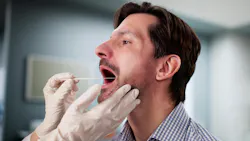
Dentistry has spent years emphasizing prevention, early detection, and the oral-systemic connection. But one of the most accessible diagnostic tools remains largely underutilized in everyday care. It’s not because the science isn’t there but because the system isn’t set up to support it.
On a recent episode of Dentistry Unmasked, Dr. Paul Slowey stated, “I think in order to get dentistry where it needs to be, there are a couple of things that need to happen. We need to be recognized by the FDA for a start … and then the second issue is the reimbursement situation.” Of the two, the second issue may be the bigger one.
Paul's background in salivary diagnostics
Dr. Slowey has spent more than 30 years working in salivary diagnostics, developing technologies now used across healthcare including applications used in concussion testing for professional sports.
“We can collect saliva for anything, from anybody,” Slowey said. While dentistry is slow on the uptake, medicine is doing exactly that. Saliva contains DNA, RNA, proteins, hormones, and inflammatory markers that reflect what’s happening throughout the body. Biomarkers associated with conditions like cardiovascular disease, diabetes, cancer, and systemic inflammation can all be detected in oral fluids often with a similar relationship to their appearance in the blood.1
How testing technology works
For years, the limitation wasn’t the concept, it was the reliability of the sample. Saliva degrades quickly. Without proper handling, many biomarkers break down before they can be analyzed, however, advances in collection and stabilization technology have changed that. Modern systems can preserve RNA, DNA, and proteins long enough for accurate transport and testing while also filtering out interfering substances to produce cleaner, more consistent samples. In other words, the limitation is no longer whether saliva can be used diagnostically, it’s whether clinicians are supported in using it. And that’s the linchpin; the support.
 dental diagnostics and screening
What's holding back integration
Even though the technology exists and has been used in other areas of medicine, salivary diagnostics have not been widely integrated into dental workflows. That gap isn’t due to lack of relevance. If anything, dentistry is uniquely positioned to lead.
“The dentist is the first person who is likely to identify a lot of these diseases,” Slowey said. Additionally, dentists and their teams understand the bigger picture connection. Biomarkers enter saliva through multiple pathways, including passive diffusion, active transport, gingival crevicular fluid, and salivary gland secretion. According to Slowey, many of these markers appear in saliva shortly after they are detectable in blood. “As soon as it appears in the bloodstream, you’re going to see it in the saliva,” Slowey said. “You might need a more sensitive technology to detect it, but these technologies are available now.” That creates a clear opportunity for this profession to use the dental visit as an early detection checkpoint for both oral and systemic disease. Unfortunately, that opportunity is largely being wasted.
So if dentistry is in position, with qualified healthcare professionals and a patient base that would support it, why is this still an issue? Two contributing issues are regulatory challenges, including FDA recognition of saliva-based diagnostics, and educational gaps as salivary testing is not consistently emphasized in dental and hygiene programs.
But again and again, the primary obstacle comes back to reimbursement. “There are codes out there for reimbursement of dental tests, but they’re not being utilized properly,” Slowey said. That single issue creates a cascade of consequences. As we have seen with other dental codes over the years, if the diagnostic test isn’t reimbursed or isn’t reimbursed clearly and consistently, it doesn’t get adopted. If it doesn’t get adopted, it doesn’t become part of the standard workflow. And if it’s not part of the workflow, its clinical value never reaches the patient. In that sense, reimbursement isn’t just a financial issue. It’s a clinical issue. It determines which tools are used and which are left on the shelf and that simply cannot stand.
Further, it limits the role dental professionals play in upstream patient care. In 2019, it was reported that nearly 30 million Americans had a dental visit without seeing their primary care physician in the same year which demonstrates the need for dental professionals to be early detectors of disease.2
Bridging the gap
While it might seem like an impossible task to streamline collaboration between medical and dental, efforts are underway to improve adoption, including collaborations between medical and dental stakeholders and the development of saliva-focused research consortiums.
“I’m in conversations with people whose ultimate goal is to try and get those two fields to marry a little bit further.” Dr. Slowey said.
But progress depends on more than technology. It depends on alignment between regulatory bodies, payers, educators, and clinicians.
For a deeper discussion on salivary diagnostics and their role in dentistry, listen to the full episode featuring Dr. Pam Maragliano, Dr. Brian Novy, and Dr. Paul Slowey.
References:
- Meleti M, Cassi D, Vescovi P, et al. Salivary biomarkers for diagnosis of systemic diseases and malignant tumors. A systematic review. Med Oral Patol Oral Cir Bucal. 2020;1;25(2):e299-e310. doi:10.4317/medoral.23355
- Manski R, Rohde F, Ricks T, et al. Trends in the number and percentage of the population with any dental or medical visits, 2019. 2022 Oct. PMID: 37616435.
About the Author
 Sarah Butkovic, MA, BA
Sarah Butkovic, MA, BA
Sarah Butkovic, MA, BA, is an Associate Editor at Endeavor Business Media, where she works on creating and editing engaging and informative content for today's leading online dentistry publications. She holds a Master's English Language and Literature from Loyola University Chicago and is passionate about producing high-quality content that educates, inspires, and connects with readers.