A clinician’s reflection on dental manufacturing
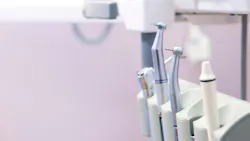
After more than twenty years as a registered dental hygienist, my professional identity began chairside. Like most clinicians, my focus was always clear: provide excellent care, protect patient health, and use the best tools available to deliver the highest possible standard of treatment. Every day we rely on instruments, materials, and technology to support that mission, often without pausing to consider the immense amount of work that goes into creating them.
For much of my clinical career, I evaluated products the same way many clinicians do through performance. Does it work? Is it reliable? Does it help me deliver better care for my patients? If the answer was yes, it earned a place in my operatory. Over time, however, my career expanded into the nonclinical side. Now, working with companies that develop and manufacture dental products and devices has offered me a different vantage point—one that has reshaped how I view the instruments and technologies we use every day.
As clinicians, we are the final vessel of care. We are the ones holding the handpiece, engaging the ultrasonic scaler, placing the composite material, or operating the equipment that touches our patients. The public experiences dentistry through us. Yet behind every instrument or device lies an extensive process that many clinicians rarely see. What appears to us as a finished product is often the result of years of research, development, testing, and refinement.
The importance of the manufacturer
Chemists study material composition and stability. Engineers design and redesign components to improve performance and durability. Researchers test safety, functionality, and longevity. Iterations are built, tested, adjusted, and tested again. What we receive in a sterile pouch or a neatly packaged cassette is the final chapter of a long, meticulous story. A story that involves far more science, engineering, and craftsmanship than most of us ever realize during a busy clinical day.
In the clinical environment, we strive for the highest standards in patient care, but manufacturers must operate at an even higher level of scrutiny. Quality systems govern every step of development and production. Standardized manufacturing processes, validation protocols, and regulatory
requirements ensure that products are consistent, safe, and reliable before they ever reach a clinician’s hands. When we open a package of burs or use a new instrument in the operatory, it’s easy to focus only on the final product. What we often don’t see is the extensive infrastructure that makes that product possible.
Early in product development, ideas and innovation often receive the spotlight. And ideas are important. Many great products begin with a clinician identifying a challenge in practice or an engineer envisioning a new solution. But over time, working in the industry has taught me that the idea itself is just the beginning; transforming it into a dependable product that clinicians can trust requires far more than creativity. It requires robust manufacturing systems, quality control at every step, supply chain coordination, regulatory compliance, and the ability to scale production without sacrificing precision.
Why reliable tools matter
Creating a product line that consistently performs in clinical environments and stands the test of time is an incredibly complex task that has given me a deeper respect for the people who contribute to this process. Behind every dental product are teams of engineers, chemists, researchers, technicians, machinists, and regulatory specialists. In many ways, they are modern artisans. It can take months to find properly trained individuals skilled at applying both technical expertise and meticulous attention to detail to create tools that clinicians depend on every day.
Dentistry has always been a blend of science and craftsmanship. As clinicians, we refine techniques, develop tactile sensitivity, and rely on experience to guide our work.
Working together across disciplines
Manufacturing operates in a similar space. While advanced technology and automation play an essential role, the human element remains just as critical. The most effective innovations in dentistry emerge through collaboration. Clinicians bring experience from the operatory. Engineers bring technical knowledge and design capabilities. Chemists bring expertise in materials and formulations. When these disciplines work together, ideas evolve into products that truly support clinical care.
Having experienced both sides of dentistry, I’ve come to see how interconnected they truly are. Clinicians depend on manufacturers to produce safe, reliable tools. Manufacturers depend on clinicians to provide insight, feedback, and real‑worldperspective.
Whether we are delivering care in a treatment room or working behind the scenes in research labs and manufacturing facilities, our shared goal remains the same: using science, technology, and engineering to improve human health. When clinicians and manufacturers work in alignment, dentistry advances not just through innovation, but through the thoughtful combination of craft, science, and a shared commitment to the people we serve.
About the Author
 Claudia Walder, BSDH, BA, RDH, CDA
Claudia Walder, BSDH, BA, RDH, CDA
Claudia Walder, BSDH, BA, RDH, CDA, is a registered dental hygienist, writer, and clinical education consultant. With over 20 years of experience, she specializes in translating dental innovation into practical, evidence-based insights for clinicians and manufacturers.