New CBCT use guidelines for endodontics updated for the first time in 10 years
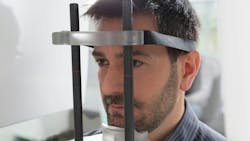
The use of cone-beam computes tomography (CBCT) in the field of endodontics is changing —the American Association of Endodontists (AAE) and the American Academy of Oral and Maxillofacial Radiology (AAOMR) just updated their CBCT use guidelines for 2026.
Prior to this revision, clinicians and endodontists primarily referred to their 2015 statement on CBCT-and in today's technology-driven world, a 10-year gap is a long time to wait for an update. Theirnew statement introduces 12 condensed clinical recommendations "for greater clarity and implementation in clinical practice," according to a recent AAE press release.
Why this update matters
CBCT has become an essential component of 3D dental imaging nowadays, allowing endodontists to identify and diagnose patients with diseases and abnormalities more easily. However, the rapid advancement of dental technology, including the adoption of ever-evolving AI tools, means following current practices and methodology is critical to case success.
Broader implications of this update
The new CBCT guidelines don't just impact endodontics; they also ensure patients that the treatment they're receiving is safe, tailored to their specific needs, and based on modern scientific research; recent ADA and AAOMR findings also noted that lead aprons and thyroid collars are no longer recommended for CBCT.
Additionally, endodontic students and clinical educators can be assured that the curriculum they're either learning or teaching is not obsolete; instead, it reflects the current standards of care.
Dr. Steven J. Katz, president of the AAE, underscored this by saying: "The 2025 update delivers a more accessible and modern framework for how and when CBCT should be used in endodontic diagnosis and treatment. We're offering clinicians both guidance and flexibility rooted in the latest evidence and real-world use."`1
New CBCT guidelines
In addition to the 12 highlighted critical cases, the AAE and AAOMR's guidelines include the following updates:
-
Enhanced training in CBCT use and interpretation for dentists and staff, with a focus on collaboration across educational institutions and dental specialties.
-
Support for the ALADAIP principle to protect patient safety, which ensures radiation exposure is As Low As Diagnostically Acceptable
-
Adoption of AI's burgeoning role in dental technology and how it can support image interpretation to improve diagnostic confidence and consistency.1
The statement also stresses that CBCT should be used selectively, not routinely; a clinician's decision to use CBCT must be guided by "clinical indications, existing imaging, and the patient's specific needs."1
2026 vs. 2025
Compared to the 2015 guidelines, the new update has a greater focus on AI, AR, digital navigation, and robotic dentistry, as these were all emerging technologies rather than mainstays at the time. There was minimal guidance on CBCT for healing assessment in 2015, but the update now includes information about when intraoral radiographs are preferred, when CBCT may be used for a follow-up, and case-by-case decision-making framework. Tailoring doses specifically for individual patient needs is also elaborated on.
Additionally, there is now an entire section dedicated to image artifacts and how to decrease interference during the scanning process.1,2 Overall, the 2026 guidelines offer a more comprehensive overview of CBCT rather than explaining why it is just s supplementary imaging option.
References
-
AAE and AAOMR release joint position statement on the use of CBCT in endodontics. American Association of Endodontics. January 13, 2026. Press release.
- Use of cone-beam computed topography in endodontics 2015 update. American Association of Endodontics. Press release. https://aaomr.org/common/Uploaded%20files/Position%20Papers/aae-aaomr-2015update.pdf
About the Author

Sarah Butkovic, MA, BA
Sarah Butkovic, MA, BA, is an Associate Editor at Endeavor Business Media, where she works on creating and editing engaging and informative content for today's leading online dentistry publications. She holds a Master's English Language and Literature from Loyola University Chicago and is passionate about producing high-quality content that educates, inspires, and connects with readers.