Investment in vVardis signals growing interest in peptide-based caries treatment
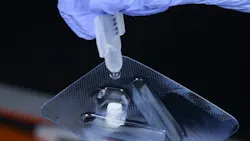
Increased financial backing in peptide-based caries treatment could shift care toward regeneration-focused, minimally invasive approach in the future. Asset management company Apollo has recently invested in a noninvasive, peptide-based treatment method for incipient caries and white spot lesions developed by dental medtech giant, vVARDIS.
What is Curodont?
This product, known as Curodont, is intended for use in the early stages of decay, before a restoration would typically be required. It is the first and only commercially available peptide-based formula on the market, and has been used in treatment for over three million teeth since its introduction in the United States, according to vVARDIS.1
They recently announced an investment deal with Apollo to globally expand their Curodont product line.
This investment establishes vVARDIS, whose primary offering is the Curodont product, as one of the few privately owned billion-dollar healthcare companies in Europe. Originally based in Switzerland, vVARDIS’s Curodont is now offered in nearly 20 percent of general dental practices in the US.1
Why this investment matters
Treatment and prevention options for dental caries have remained relatively stable for decades, but as interest in noninvasive dentistry has grown, so has interest in products that can either prevent demineralization or treat caries in its earliest stages. Peptides as a treatment for early enamel lesions are particularly popular nowadays.
In practice, treatments like Curodont are positioned as an alternative to early restorative intervention, giving clinicians another option for managing incipient lesions without drilling.
Peptides for caries treatment
In an acidic environment, self-assembling peptides assemble nanofiber scaffold within the demineralized enamel. As a result of this process, RDH contributors Rachel Miller and Shelley Brown note, “calcium and phosphate ions from saliva or topical agents can nucleate and grow new hydroxyapatite crystals directly inside the lesion.”2
One clinical trial found that 80% of caries treated with peptides and fluoride over a six-month period became inactive compared to 34% of those treated with fluoride alone.2 However, researchers in a 2023 study examining peptides for caries management noted that although most laboratory studies showed that peptides were effective, more clinical research needs to be done to help peptide-based treatment expand.3
But peptides are being implemented outside the dental industry as well. Young people have been increasingly using injectable peptides to achieve beauty and cosmetic goals, particularly to alleviate body pain and improve skin and hair health. Some peptides possess wound-healing and antioxidant properties, which can contribute to the reduction in oxidative stress in the skin and delaying the skin’s aging process.4
The overall interest in peptides—whether it be for medical intervention or esthetic purposes—shows that investment firms such as Apollo Funds see significant growth potential in this market. A large investment in a company that offers one incipient caries product may portend a future where Curodont’s technology in treating caries becomes more ubiquitous.
vVARDIS notes that they are committed to early intervention and effective, noninvasive treatment. Their products are currently “supported by more than 250 scientific publications, including meta-analysis, peer-reviewed and long-term peer-reviewed real-world evidence clinical studies, with a documented success rate above 90%.” VVardis also says that the founders Drs. Haley and Goly Abivardi will maintain a substantial majority stake in the company.
References
-
vVARDIS announces investment from Apollo, achieves unicorn status. April 28, 2026. Press release.
-
Miller R, Brown S, The next frontier in prevention is regenerating enamel naturally. RDH. October 16, 2025. https://www.rdhmag.com/patient-care/in-office-preventive/article/55323017/the-next-frontier-in-prevention-is-regenerating-enamel-naturally
-
Zhang OL, Niu JY, Yu OY, et al. Peptide designs for use in caries management: a systematic review. Int J Mol Sci. 2023;20;24(4):4247. doi:10.3390/ijms24044247
-
Pintea A, Manea A, Pintea C, Vlad RA, Bîrsan M, Antonoaea P, Rédai EM, Ciurba A. Peptides: emerging candidates for the prevention and treatment of skin senescence: a review. Biomolecules. 2025 9;15(1):88. doi:10.3390/biom15010088
About the Author
 Sarah Butkovic, MA, BA
Sarah Butkovic, MA, BA
Sarah Butkovic, MA, BA, is an Associate Editor at Endeavor Business Media, where she works on creating and editing engaging and informative content for today's leading online dentistry publications. She holds a Master's English Language and Literature from Loyola University Chicago and is passionate about producing high-quality content that educates, inspires, and connects with readers.