In Brief: Fluoride safety ruling overturned, new data on toothbrushing habits, DTA scholarship announced
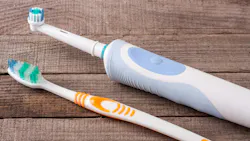
New study says manual toothbrush users don’t brush long enough
A new study published in the International Journal of Dental Hygiene found that manual toothbrush (MTB) users brush for a shorter amount of time compared to powered toothbrush (PTB) users.
Although researchers reported an increase in manual brushing duration overall, MTB users averaged 87.3 seconds (roughly a minute and a half) whilst PTB users averaged 151.1 seconds.1 A two-minute brush can also be expressed as thirty seconds per quadrant or about four seconds per tooth.
This data supports the need for provider-to-patient conversations about at-home oral care, including brush time, using timers, powered versus manual toothbrushes, technique, coverage, and patient-specific barriers. However, researchers noted that brush time alone is not enough to support effective plaque control—and it is not the only indicator of brushing quality.
The Global Burden of Disease 2015 study reports that approximately 3.5 billion people suffer from oral disease worldwide, with dental caries and periodontitis being the most common preventable diseases. According to the International Journal of Dental Hygiene, risk factors include “high levels of cariogenic bacteria, inadequate saliva production, insufficient fluoride exposure, suboptimal oral hygiene practices, inappropriate infant feeding practices, and socioeconomic disadvantages.”1
Fluoride safety ruling overturned after district judge commandeered outcomes
The US Court of Appeals for the Ninth Circuit has overturned a 2024 lower court order directing the EPA to regulate fluoride in drinking water under the Toxic Substances Act.
The court ruled that the district judge in the case overstepped boundaries by including pending evidence presented by neither party—and did so on his own accord. Thus, the lower court ruling regarding fluoridated water was partially based on information that was not presented to the EPA, prompting an unjustified decision to require an additional review of fluoride safety standards.
The ADA has publicly commended this decision; president Rich Rosato commented by saying: “The appellate court recognized and noted that the lower court improperly overstepped its role and relied on a pending report, presented by neither party in the case was an abuse of discretion. We strongly support the appeals court’s decision and believe that the best scientific evidence for more than 80 years consistently has demonstrated that community water fluoridation is both safe and effective.”
In a recent press release, the ADA mentioned this legal decision will allow the lower court to realign public opinion of fluoridated water and dispel misinformation—reinforcing that i does not lead to cognitive decline when consumed at optimal levels. The organization filed an amicus brief in July of last year to support the EPA’s appeal.2
New dental assistant scholarship opportunity
Dental assistants can now apply for a new scholarship opportunity through The Dental Trade Alliance (DTA) foundation. The new two-part Gary & Deborah Steinberg Dental Assistant Scholarship offers infection control and patient safety education and will grant 10 students a $2,500 scholarship for US-based dental assisting programs each year.3
Recipients must complete the Dental Infection Prevention and Control Certificate after graduation to be eligible for an additional scholarship. This allows them to pursue a Dental Infection Prevention and Control Certification.
According to the Association for Dental Safety (ADS) , benefits of receiving this certificate include:
-
Enhanced job performance and satisfaction
-
Greater trust and credibility with stakeholders, including patients, colleagues, employers, students, and customers
-
Expanded opportunities for career growth
-
Clear demonstration of one’s commitment to the safety of patients and the dental team
-
Validation of expertise in dental infection prevention and control
This scholarship was funded by a $125,000 donation from Gary and Deborah Steinberg in collaboration with the ADS-DANB-DALE Foundation.
In a press release by the ADS, founding member and chief engagement and relationship officer Andrew Whitehead said: "Dental assistants by and large are also the infection control coordinators within the majority of practices, yet they have little to no training in infection control other than what they learned on the job. We need to help educate dental assistants, and what better way to do it than through a program like this.”3
References:
-
Thomassen TMJA, Hu YSR, van der Weijden FA, Slot DE. Exploring Toothbrushing Duratidh.70048 Adults: A Systematic Review. Int J Dent Hyg. 2026;4. doi:10.1111/idh.70048
-
Court of Appeals rules EPA case ‘commandeered’ by lower court. American Dental Association. May 22, 2026. Press release.
-
DTA Foundation offers new scholarship for dental assistants in collaboration with ADS’ Andrew Whitehead Education & Certification Scholarship. Association for Dental Safety. Press release. May 11, 2026.
About the Author
 Sarah Butkovic, MA, BA
Sarah Butkovic, MA, BA
Sarah Butkovic, MA, BA, is an Associate Editor at Endeavor Business Media, where she works on creating and editing engaging and informative content for today's leading online dentistry publications. She holds a Master's English Language and Literature from Loyola University Chicago and is passionate about producing high-quality content that educates, inspires, and connects with readers.