New noninvasive technique to detect OPSCC, oral appliances to reduce OSA, updated research on fluoride’s “link” to low IQ scores
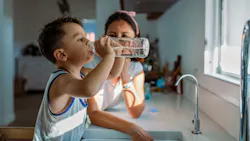
2023 claim linking fluoride with low IQ in children further disproved
A May 2026 study from the Journal of the American Dental Association (JADA) confirms already-existing study data disproving the “link” between water fluoridation and lower IQ scores in children1 purported by Secretary of Health and Human Services RFK Jr.
In 2023, the medical journal JAMA Pediatrics published a paper analyzing a report from the National Toxicology Program (NTP) which concluded with "moderate confidence" that high levels of fluoride exposure may be connected to lowered IQ.”2
This controversial study stoked pre-existing apprehension towards community water fluoridation (CWF), but since its release, new studies examining decades-long research found no correlation between safe, regulated levels of fluoridated water added to US drinking supplies and cognitive decline in children.3
A new JADA study further espouses this connection. Researchers assessed four government reports (supplemented by three independent reports and seven additional meta-analyses). Collectively, they found “no association between fluoride concentrations relevant to CWF and IQ scores” based on the findings from these studies. Researchers also stated that “there is no established biological mechanism to explain fluoride’s effect on IQ. These limitations raise questions about the findings and preclude discussion of causal relationships.”1
It is worth nothing that they did find an association between high fluoride levels and lower IQ scores in endemic areas (with fluoride levels above 1.5 mg/L), but the design and conduct of the studies that supported this conclusion may be methodologically flawed (researchers cited weak study designs, possibly inaccurate fluoride exposure measurements, confounding variables, and so on).
This new report from JADA supports decades of public health consensus that fluoride in water is safe at the levels used in the United States and has significant oral health benefits.
Diagnostic system can now screen for oropharyngeal squamous cell carcinoma
JADA researchers recently evaluated whether an existing molecular diagnostic platform could be adapted to detect oral HPV using salivary oral rinse samples. This may be a potential future avenue for identifying patients at higher risk for HPV-associated oropharyngeal squamous cell carcinoma (OPSCC).4
OPSCC has spiked substantially in recent years, with HPV-associated disease majorly contributing to that ncrease.
In their study, investigators tested the GeneXpert real-time PCR platform using salivary oral rinse samples collected from patients suspected of having head and neck cancer as well as individuals considered at higher risk for HPV infection. Researchers compared the system’s HPV-16 detection performance against quantitative real-time PCR.
The platform demonstrated 100% specificity and 72% sensitivity in detecting oral HPV-16, with results showing strong agreement with qPCR testing.
Researchers suggested the approach may offer practical advantages, including faster turnaround time and easier operation compared to traditional laboratory-based testing methods.4
However, the study evaluated HPV detection—not direct cancer diagnosis—and additional research would likely be needed before salivary HPV testing could be considered for routine screening in dental settings.
Key role of oral appliances in OSA management
A new JADA study reviewed data connected to obstructive sleep apnea (OSA), one of the most common sleep disorders, and ways dentists can support the diagnosis and management.5
Dental care professionals can play a meaningful role in OSA care as some craniofacial features and dental anatomy can be risk factors. Multiple professional associations, including the American Dental Association, suggest dentists participate in screening for sleep breathing disorders.5
The consequences of OSA can be cardiometabolic and neurocognitive. Patients with OSA can experience asthma or obesity and increase the risks of developing neurocognitive disorders such as Alzheimer disease or Parkinson disease.
Dentists applying screenings can use instruments such as questionnaires or clinical examinations, and a combination of these methods can provide the most optimal testing. There are also options for using oral appliance therapy with mandibular advancement devices. The Commission on Dental Accreditation has recommended that predoctoral dental education include assessing for OSA.
JADA proposes a collaborative approach to managing long-term OSA. With sleep medicine specialist, cariologist, endocrinologist, mental health care professionals, and qualified dentists in dental sleep medicine there can be an improvement in diagnosis accuracy and reducing treatment delays.4
By being part of the bigger picture for a better sleep, dentists can have future opportunities within the artificial intelligence-assisted phenotyping and precision diagnostic integrating data. This improvement can path a way for more predictive models of airway collapsibility and treatments.
References
-
Kumar JV, Levy SM, Warren JJ. An update on community water fluoridation, part 2. J Am Dent Assoc. 2026;157(5):471-486. doi:10.1016/j.adaj.2026.02.010
-
Fluoride exposure: neurodevelopment and cognition. National Toxicology Program. 2023. https://ntp.niehs.nih.gov/research/assessments/noncancer/completed/fluoride
-
Basilio H. Fluoride in tap water not linked to lower Child IQ, massive study finds. Scientific American. November 19, 2025. https://www.scientificamerican.com/article/massive-study-debunks-one-of-rfk-jrs-biggest-claims-about-fluoride-in-tap/
-
Huang X, Balakittnen J, Weeramange CE, et al. Salivary oral rinse offers a noninvasive method to detect oral human papillomavirus infections on the GeneXpert system. J Am Dent Assoc. 2026;157(5):448-458.e4. doi:10.1016/j.adaj.2026.02.013
-
Glick A, Chiang HK, Huynh N, Levine M. Awakening to opportunity: dentistry's role in the evidenced-based management of adult obstructive sleep apnea-a narrative review. J Am Dent Assoc. 2026;157(5):459-470. doi:10.1016/j.adaj.2025.12.020
About the Author
 Sarah Butkovic, MA, BA
Sarah Butkovic, MA, BA
Sarah Butkovic, MA, BA, is an Associate Editor at Endeavor Business Media, where she works on creating and editing engaging and informative content for today's leading online dentistry publications. She holds a Master's English Language and Literature from Loyola University Chicago and is passionate about producing high-quality content that educates, inspires, and connects with readers.
Bridget Janis
Staff Writer
Bridget Janis is a staff writer at Endeavor Business Media’s Dental Group, where she reports on clinical, industry, and public health topics for leading dental publications. She holds a bachelor’s degree in journalism from Oakland University in Rochester, Michigan, and is focused on producing clear, engaging, and informative content for dental professionals.