AI needs whole-person health information—and that includes dentistry
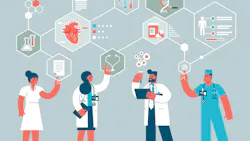
AI is transforming healthcare, but if oral health remains disconnected from medical records and clinical workflows, care teams and AI-enabled tools could leave clinicians making decisions without the full picture. Here’s why medical-dental integration is essential to prevention, earlier risk identification, and whole-person care.
AI is increasingly being integrated into healthcare operations and clinical decision-making, but oral health data remains largely disconnected from clinical systems. When AI-enabled tools rely on incomplete patient records, important oral health context can be missed—affecting care and potentially worsening health disparities.
Katie D’Amico, VP of growth and innovation at CareQuest, shares her expertise on AI, its relationship to healthcare, and how medical-dental integration can no longer be brushed aside.
The issue with leaving dentistry out of the conversation
Katie says that one of the risks with AI in healthcare is that it can generate sophisticated outputs from incomplete inputs. In other words, if oral health data is absent from a patient’s medical health record, clinicians and AI-enabled tools may assume they are seeing the full picture when they are not.
Thus, signals that could have otherwise indicated various oral or systemic disease are flying under the radar. And, in the right context, indicators such as periodontal disease, untreated decay, oral infection, inflammation, oral lesions, and radiographic findings can support earlier risk identification, stronger referrals, and more coordinated care. If the data is essentially "locked out" of broader healthcare conversations, it’s simply not helping the rest of the healthcare team treat patients.
A more complete patient record including labs, past diagnoses, prescribed medications, allergies, and other oral health information should be available to providers both within and outside the dental profession—and AI can help bridge this gap by translating connecting data into actionable insights within the workflow.
"AI can help translate medical and dental data into actionable insights, embedded within the workflow to augment clinical decision-making," Katie says.
Additionally, patients with the least consistent data face the greatest barriers to effective care. D’Amico says there is a gap between medical and dental: insurance models, separate records, different tech vendors, workflows, and separate—or even competing—incentives. Unlike medical, dental is using different practice management systems and platforms, and AI isn’t being funneled into the dental side of things to the same degree of specificity as medical. This puts a large demand on the patient to answer questions about their health history, which may not always yield accurate results.
How AI can improve health outcomes
AI can help assist with care in a myriad of ways, including through emerging innovation around saliva diagnostics and the oral microbiome. Testing can be done chairside or at home, which can help identify early signals tied to caries risk, periodontal disease, inflammation, oral infection, and broader whole-person health risks.
"The innovation is not just the test," Katie explains. "It is the ability to translate saliva and microbiome signals into actionable, personalized insights: What is my risk? What may be driving it? What can I change? Do I need a dental visit, different home care, monitoring, a referral, or support from a care team?"
That is where AI comes in. It can help make complex biological information understandable and actionable for consumers, while also helping dental and medical teams identify risk earlier, personalize prevention, and connect people to care before issues become more serious.
"It is important to note that saliva diagnostics and oral microbiome science are still evolving and require continued evidence generation, validation, standards development, reimbursement pathways, and workflow integration. However, the broader opportunity is compelling: moving oral health from a reactive model of care toward a more personalized, preventive, and whole-person approach. Data and AI have the potential to be foundational enablers of that shift."
Success in five years
When it comes to healthcare, the end goal is providing affordable, accessible, and holistic, quality care. Key enablers include connected systems, more complete patient data, and practical support for dental organizations across practice sizes and care settings to adopt technology in ways that improve care, reduce burden, and strengthen the patient experience.
AI can also be used to help engage people in their everyday health. According to Katie, most of the responsibility for maintaining proper oral health falls on the patient (i.e., brushing and flossing at home). With access to a complete and accurate health history inclusive of dental, clinicians can use AI to meaningfully nudge and activate patients. AI-enabled tools can help them understand their mouth and its impact on the rest of their body, positioning dentistry around prevention and early risk identification that’s approachable.
Right now, she believes there are three practical opportunities for adopting and utilizing connected data and AI:
Interoperability: Teams should be asking their electronic record vendors to connect to the broader health information ecosystem, so relevant medical and dental information can move more easily between care teams.
Screening and referrals: Dental is a key access point for preventive screenings. Although dentists can't diagnose conditions outside their professional scope, they can still play a role by doing screenings for things like blood pressure and saliva to collect a more holistic health profile for the patient, educate patients, and connect them to appropriate follow-up care.
Administration: Things like revenue cycle, claims management, billing, scheduling, documentation, and patient reminders can alleviate front desk busywork and allow teams to focus on providing better care and a better patient experience.
Other ways clinicians can improve medical-dental integration include hosting medical specialists for in-office CE events and creating a robust referral network, learning about AI’s role in the dental office, and attending conferences where both medical and dental professionals learn together.
Ultimately, whole-person care requires whole-person data—and right now oral health is a missing piece. Katie and her team are changing this through national initiatives, including CareQuest’s partnership with Kno2, a federally designated Qualified Health Information Network (QHIN), to connect dental to the national health information exchange and enable medical-to-dental interoperability.
About the Author
 Sarah Butkovic, MA, BA
Sarah Butkovic, MA, BA
Sarah Butkovic, MA, BA, is an Associate Editor at Endeavor Business Media, where she works on creating and editing engaging and informative content for today's leading online dentistry publications. She holds a Master's English Language and Literature from Loyola University Chicago and is passionate about producing high-quality content that educates, inspires, and connects with readers.