The fear-free office: How to create an anxiety-free dental practice that patients love
Key Highlights
- Simple environmental changes that immediately reduce patient anxiety, from lighting and scent choices to waiting room design that creates a calming atmosphere
- Communication techniques and staff training approaches that help your team recognize anxiety triggers and respond with empathy and reassurance
- Technology and operational improvements that minimize stress points throughout the patient journey, including AI-powered tools that enhance comfort without sacrificing the personal touch

Between 50% and 80% of U.S. adults experience dental anxiety. That's a massive portion of your patient base avoiding care, delaying appointments, and struggling through visits. For your practice, this means no-shows, cancellations, longer appointment times, and lost revenue from patients who never return.
Anxious patients postpone routine cleanings, leading to expensive treatments later. They're less likely to accept treatment plans, refer others, or leave positive reviews. Dental anxiety doesn't just affect patient health, it directly impacts your practice's growth and reputation.
The good news? Creating an anxiety-free dental practice isn't about expensive renovations. It's about understanding triggers and addressing them through environmental design, communication strategies, and smart operational improvements.
Understanding what actually triggers dental anxiety
Before creating an anxiety-free environment, understand the common triggers: fear of pain, loss of control, past trauma, dental office sounds and smells, vulnerability, and embarrassment about oral health.
What makes dental visits uniquely stressful is the combination of physical discomfort with psychological vulnerability. Patients lie back with limited visibility, unable to speak, while someone hovers with sharp instruments. They hear drilling sounds their brains associate with danger and smell that distinctive dental office scent triggering childhood memories.
Your job isn't to convince patients they shouldn't feel anxious. It's to acknowledge their feelings and create an environment that naturally soothes anxieties without them having to ask.
Transform your waiting room into a comfort zone
Your waiting room sets the tone for the entire visit. Start with comfortable seating that doesn't look clinical. Choose chairs with arms, adequate cushioning, and varied options. Some patients prefer corner spots for privacy, while others want open views.
Lighting makes a massive difference. Harsh fluorescent lights trigger stress responses. Install dimmer switches, add floor lamps with warm bulbs, and maximize natural light. Create softer, well-lit areas where anxious patients can wait.
Scent matters more than most practices realize. That medicinal smell instantly triggers anxiety. Use subtle essential oil diffusers with lavender or chamomile, keep areas well-ventilated, and avoid overpowering cleaning products. If you have an AI receptionist handling calls and chats, you've already reduced the chaotic phone-ringing atmosphere.
Sound is critical. Replace TVs playing news with calming nature content or instrumental music. Offer noise-canceling headphones. Sound-insulate operatories so waiting patients don't hear drilling. When they hear procedures happening, anxiety skyrockets before they even sit in the chair.
Design your operatories with anxiety reduction in mind
The operatory is where anxiety peaks. Give patients a sense of control by installing a hand-raising system where they can signal for breaks. Explain this system at every appointment. Knowing they can stop the procedure dramatically reduces helplessness.
Temperature control is often overlooked but crucial. Anxious patients get cold, especially with air conditioning. Have blankets readily available and offer them proactively as standard procedure.
Consider ceiling-mounted TVs positioned for comfortable viewing. Load streaming services and let patients choose what to watch. Some practices offer virtual reality headsets for longer procedures. The goal is giving patients' minds something to focus on besides the procedure.
Staff training: The heart of an anxiety-free practice
Environmental design means nothing without trained staff. Your front desk needs to recognize anxiety from the first call. Train them to ask "Is there anything that makes you nervous about dental visits?" rather than yes/no questions.
Clinical teams need training on body language, pacing, and creating safety. Explain every step before it happens. Anxious patients do better knowing what to expect, even if it includes slight discomfort. Honesty paired with reassurance builds trust.
Role-play anxiety scenarios during team meetings. Practice responses to panic attacks or severe phobias. Empower your team to slow down when they sense anxiety. When your practice prioritizes comfort over speed, you naturally create a more anxiety-free environment.
Communication strategies that actually calm patients
Use person-first language: "patients who experience anxiety" rather than "anxious patients." This acknowledges anxiety is something they experience, not who they are.
Validate feelings before problem-solving. When a patient says "I'm really nervous," respond with "Many of our patients feel that way. We have several ways to make this comfortable for you." This validates while offering hope.
Give patients choices whenever possible. Explain step-by-step or distract with conversation? Use the dental dam or not? Know before each injection or just proceed? Offering choices returns control to patients who feel powerless.
Use tell-show-do for procedures. Tell what you'll do, show the instrument if appropriate, then do it. This removes surprise that often triggers panic.
Technology that reduces anxiety without losing the human touch
AI-powered receptionists field after-hours questions from anxious patients worrying at 2 AM about appointments. They send personalized reminders with calming messages.
Online scheduling systems remove phone anxiety. Patients book at their convenience, see available times clearly, and make changes without explaining themselves.
Digital treatment presentations with intraoral cameras help patients understand procedures visually, reducing catastrophizing. However, technology should enhance, not replace, human connection. The most anxiety-reducing element is still genuine empathy.
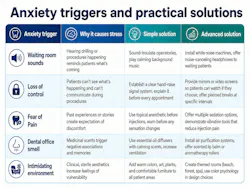
Simple atmospheric changes you can implement tomorrow
You don't need a complete renovation to create an anxiety-free environment:
Lighting: Install dimmer switches in operatories and waiting rooms. Add warm-toned lamps for softer options.
Sound: Create calming instrumental playlists. Offer headphones with music or podcast options.
Comfort items: Weighted blankets, neck pillows, stress balls, and lip balm. Display them visibly and offer proactively.
Visual distractions: Mount screens with streaming services in operatories. Add calming artwork, plants or aquariums.
Scent: Replace harsh cleaners with gentle alternatives. Use lavender or chamomile diffusers. Ensure good ventilation.
Communication: Send calming appointment reminders. Track no-show rates and patient feedback to measure effectiveness.
Online presence: Your website and content should reflect your anxiety-aware approach, showing potential patients you understand and prioritize their comfort.
The business case for anxiety-free practices
Investing in anxiety reduction benefits your bottom line. Anxious patients who find a safe practice become incredibly loyal. They keep appointments, accept treatment plans, and refer other anxious friends and family.
Reducing anxiety also reduces chair time. Calm patients are easier to treat, don't tense up, and cooperate better with instructions. Your team experiences less stress while maintaining better efficiency.
The modern patient research journey happens online, and anxiety-aware practices have significant competitive advantages. When reviews consistently mention comfort, gentleness, and understanding, you attract high-value, loyal patients. Practices that address anxiety also see better case acceptance rates because patients who trust you are more likely to say yes to treatment.
Conclusion
Creating an anxiety-free dental practice doesn't require complete overhaul or massive investment. It requires seeing your practice through patients' eyes, understanding anxiety triggers, and systematically addressing them through environmental design, communication strategies, staff training, and thoughtful technology use.
Start with atmospheric changes you can implement immediately. Focus on staff training and communication techniques that build trust. Gradually add technology and operational improvements that remove friction. Practices that prioritize anxiety reduction don't just survive in competitive markets, they thrive by building loyal patient bases and positive reputations that drive sustainable growth.
Take the first step today by identifying your practice's biggest anxiety trigger and creating a plan to address it. Your patients, and your practice's future, will thank you.
FAQ
Q: How do I know if my practice has a problem with patient anxiety?
A: Look at your no-show rates, last-minute cancellations, and patient feedback. If you're seeing patterns of missed appointments or patients who schedule but never show up, anxiety is likely playing a role. You can also simply ask during appointments, "On a scale of 1-10, how anxious did you feel about coming in today?" The answers might surprise you.
Q: What should I do when a patient has a panic attack in my dental chair?
A: Stop the procedure immediately and calmly acknowledge what's happening. Help them sit up and focus on breathing slowly. Don't minimize their experience or rush them to "get over it." Once they've calmed down, discuss whether to continue, reschedule, or consider sedation options for future visits. Having this protocol documented and practiced by your entire team ensures consistent, compassionate responses.
Q: Are sedation options necessary for an anxiety-free practice?
A: Not necessary, but they're valuable tools for severe cases. Many anxious patients respond well to environmental changes, communication strategies, and comfort measures without pharmacological intervention. However, offering nitrous oxide or oral sedation options gives you ways to help patients with severe dental phobia who wouldn't otherwise be able to receive care.
Q: How can I train my front desk staff to recognize anxiety in phone calls or messages?
A: Listen for specific language patterns like "I'm really nervous," frequent rescheduling, lots of questions about pain management, or long gaps between appointments. Train your team to respond with validation and reassurance, offer to note anxiety in the patient's chart, and provide information about comfort options before the appointment. When patients feel heard from the first contact, their anxiety often decreases.
Q: Will focusing on anxiety reduction slow down my schedule and hurt productivity?
A: Initially, you might spend slightly more time with anxious patients, but long-term, anxiety-aware practices actually become more efficient. Calm patients are easier to treat, complete procedures faster, keep appointments consistently, and accept treatment plans more readily. The return on investment in reduced no-shows, higher case acceptance, and improved reputation far outweighs any minor time increases during appointments.
About the Author
Danielle Caplain
Danielle Caplain is a copywriter at My Social Practice, where she crafts compelling, SEO-friendly content that helps dental practices grow their online presence and connect with patients. My Social Practice is a dental marketing company that provides comprehensive dental marketing services to thousands of practices across the United States and Canada.